Hair loss affects people of every hair type, but men and women with Afro-textured hair often face a different set of questions when they start looking into surgery. Years of tight braids, locs or weaves can cause traction alopecia, and genetic hair loss follows the same patterns it does in anyone else. A growing number of patients from the United States and the United Kingdom now choose an afro hair transplant in Turkey, and the main reason is simple: curly and coily hair needs a surgeon who plans for it from the first consultation.
Why Afro-Textured Hair Needs a Different ApproachCurved roots beneath the skin
Straight hair grows from a fairly straight follicle. In Afro-textured hair, the curl continues below the surface, so the root itself is curved. During extraction the surgeon cannot see that curve, which makes it easier to cut through the follicle if the instrument follows a straight path. An experienced team slows the extraction down, adjusts the angle and depth for each graft, and checks the harvested follicles to keep the damage rate low.
More coverage from each graft
The same coil that makes extraction harder works in the patient’s favour after the procedure. Because each hair curls back on itself, it covers more of the scalp than a straight hair of the same length. In practice this means a well-planned afro transplant can look full with a graft count that would look thin on straight hair.
Healing and scarring
Some people with darker skin are more prone to raised scars or keloids. This does not rule out surgery, but it should be discussed openly. A good consultation always asks about previous scars, and the surgeon decides on the technique with that history in mind.
Techniques Used for Afro Hair Transplants
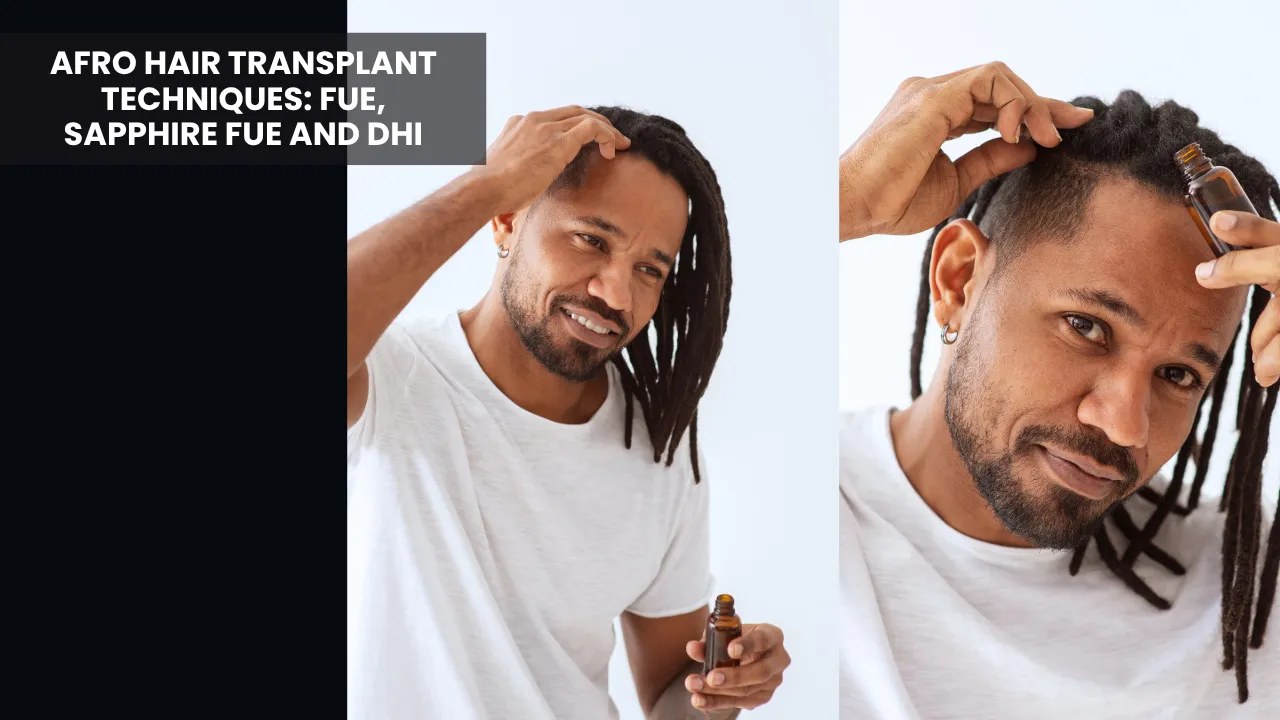
There is no single “afro technique”. The method is chosen after the donor area and the hair have been assessed, and it is often a combination of the following:
- FUE (Follicular Unit Extraction): grafts are taken one by one from the back of the head. For curly roots, surgeons may use specially sized punches and a slower, more careful extraction.
- Sapphire FUE: the channels that receive the grafts are opened with sapphire blades, which create fine, clean incisions and allow dense placement.
- DHI (Direct Hair Implantation): grafts are placed with an implanter pen that controls depth and angle, which helps when the hairline needs a precise, natural direction.
Who Is a Good Candidate?
Not everyone with thinning hair is ready for surgery. The best results usually come when:
- the pattern of hair loss has stabilised and is not progressing quickly;
- the donor area at the back and sides of the head has enough healthy hair;
- traction alopecia has stopped, meaning the tight styling that caused it has been changed;
- there is no active inflammation or infection on the scalp;
- the patient understands that new hair grows gradually over many months.
Most clinics start with an online assessment based on photos of the front, top, crown and donor area, followed by an in-person examination on the day of the procedure.
What Results Look Like Over Time
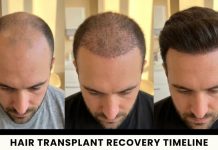
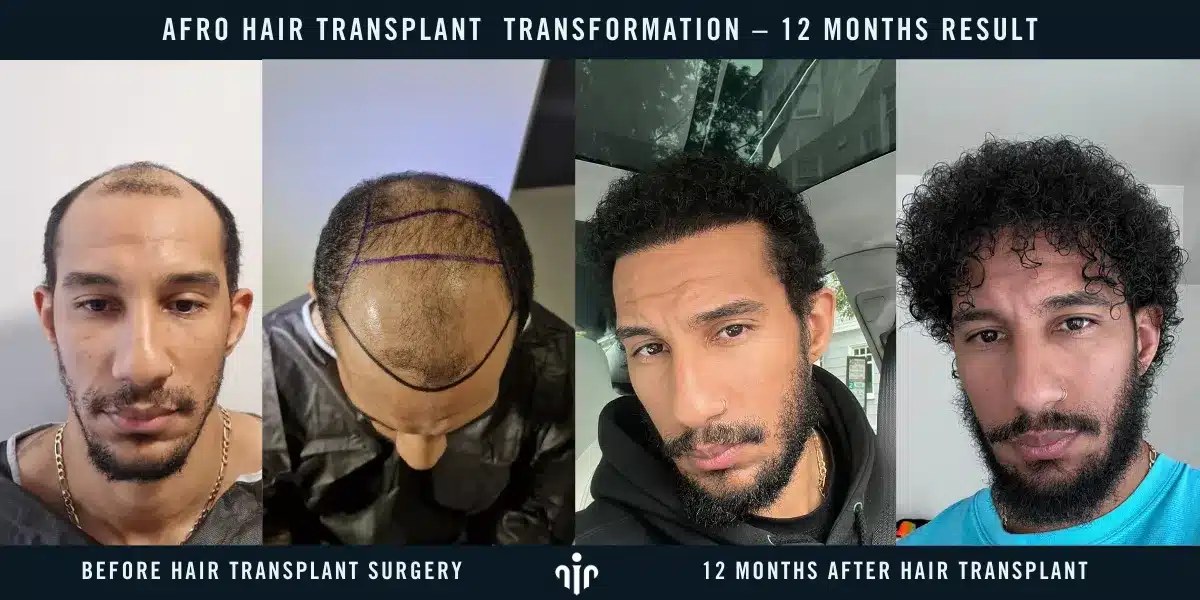
The transplanted hairs usually shed within the first few weeks. This is expected and does not mean the grafts have been lost. New growth typically begins around the third or fourth month, the change becomes clearly visible between six and nine months, and the final result is usually assessed at around twelve months. Looking at real afro hair transplant before and after cases is the most reliable way to judge how a clinic handles curly hair.
Cost Considerations
The price of an afro transplant depends on several factors rather than a single fixed number. The main ones are:
- the number of grafts needed for the area being treated;
- the technique, or combination of techniques, chosen for the hair type;
- what the package includes, such as hotel, airport transfers and aftercare products;
- the follow-up offered during the first year.
For a clear breakdown of how these factors affect the final figure, see this guide to afro hair transplant cost in Turkey.
Final Thoughts
Afro-textured hair can be restored with natural-looking results, but it rewards experience. Before booking, ask the clinic how they adapt extraction for curved roots, how they plan the hairline for coily hair, and whether they can show results from patients with a similar hair type. Those three answers will tell you more than any price list.