
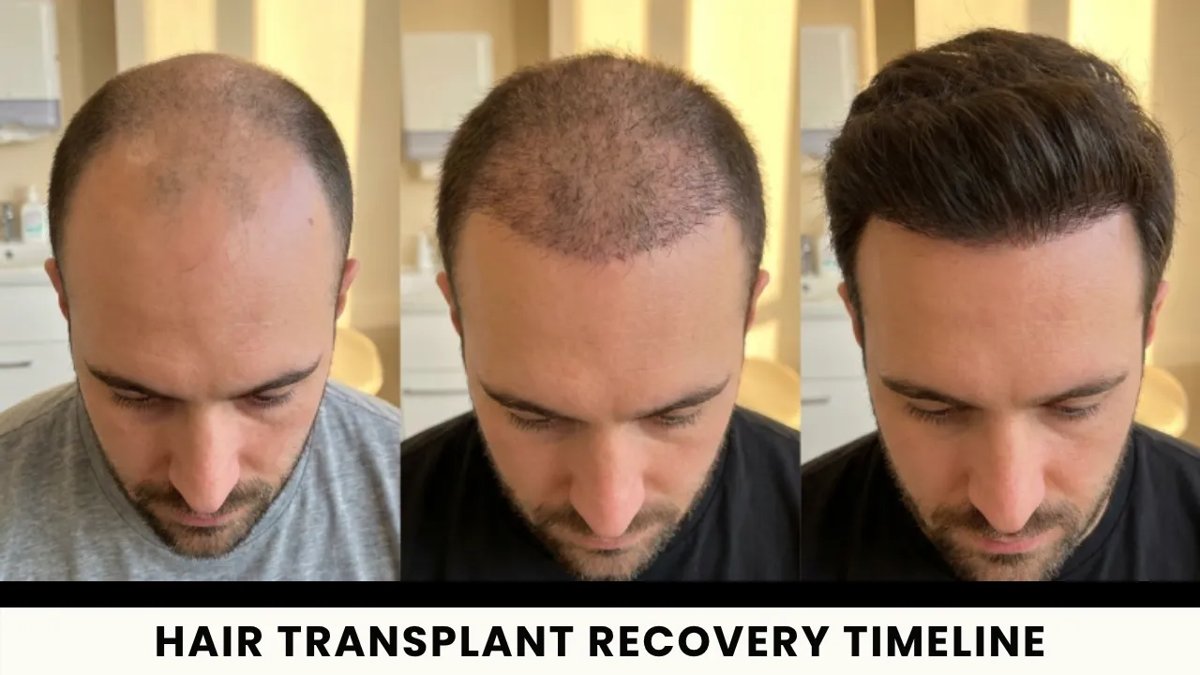
Recovery after a hair transplant follows a fairly predictable path, yet it still surprises many first-time patients. Knowing what each stage looks like helps you plan time off, prepare your home and recognise when something is not going as expected. This overview follows the typical course from the day of surgery to the point where daily life feels normal again.
The First Days
Immediately after the procedure, the scalp is tender and the donor area may be bandaged. Discomfort is usually controlled with simple pain relief as prescribed. Sleeping with the head raised, avoiding alcohol and resting are the main priorities. Swelling of the forehead often begins on the second or third day and moves downwards before fading.
It is useful to read about the common side effects after surgery before the procedure, so that ordinary swelling, itching and numbness do not cause unnecessary worry.
- swelling that peaks within the first few days
- itching as the skin heals
- temporary numbness in the donor or recipient area
- redness that fades over several weeks
The Scab Stage
Small crusts form around each graft within a day or two. Gentle washing, as demonstrated by the clinic, helps soften them over time. Patients often want to know when scabs fall off after a hair transplant; for many people most are gone by the end of the second week. Short hairs often come away with the crusts, which is normal because the follicle remains under the skin.
What to avoid while crusts remain
- scratching, picking or rubbing the treated area
- swimming pools, saunas and steam rooms
- tight hats, helmets or pressure on the grafts
- strenuous exercise that causes heavy sweating
Back to Work and Social Life
When you return depends on the type of work you do and how comfortable you feel with visible healing. People in office or remote jobs often go back within about a week, while those whose work is physical or takes place in dusty or hot conditions usually need more time. For a fuller answer to the question can I go to work after a hair transplant, consider your commute, any protective headwear and how much contact you have with the public.

The Months That Follow
Several weeks after surgery, many of the transplanted hairs shed. New growth usually begins a few months later and continues to improve for a year or more. During this time, patience and consistent follow-up matter more than any product. Contact the medical team if you notice increasing pain, spreading redness, discharge or fever at any stage, and keep your follow-up appointments even if everything seems fine.
Practical Preparation Before Surgery
Recovery goes more smoothly when the basics are arranged in advance. Plan for someone to accompany you home if possible, prepare a comfortable place to rest with the head raised and keep loose, button-up clothing ready. If you are travelling for treatment, allow at least one or two days after surgery before flying, as many teams prefer to see patients for the first wash and a check of the grafts. Write down the medication schedule you are given and set reminders, since the first days can feel busy. Having these details settled lets you focus on resting and following the aftercare instructions.
Finally, keep the contact details of the medical team easy to find, so that any question during recovery can be answered quickly.