For more than two decades, searching the web followed a familiar pattern. You typed a few words into Google, scanned a list of links and chose the result that looked most promising.
That behaviour has not disappeared, but it is no longer the only way people find information.
Search is becoming more conversational, more personalised and increasingly capable of answering questions directly. Google can summarise information inside the search results, while tools such as ChatGPT and Gemini allow people to ask complex questions, refine them and continue the conversation without starting a new search each time.
For businesses, publishers and marketers, this creates a much broader idea of what search visibility actually means.
Ranking highly in Google still matters. But being discoverable may now also mean appearing as a source in an AI-generated answer, being mentioned as a relevant brand, having useful content referenced elsewhere on the web or becoming one of the sources people deliberately choose to follow.
SEO is not disappearing. The environment around it is expanding.
Search is moving away from isolated keywords
Traditional search encouraged people to simplify their questions.
Someone planning a renovation might type “new windows price” rather than describe the size of the house, the age of the windows, the climate and whether energy efficiency or appearance mattered most.
People learned to communicate with search engines in keywords.
Generative search allows them to behave much more naturally.
A user can ask:
“What should I consider before replacing the windows in a 1970s house if I want to improve energy efficiency without changing the appearance too much?”
That is not simply a longer keyword. It contains context, priorities and several interconnected questions.
The response can then lead to another question.
“What difference would triple glazing make?”
“Would replacing the frames be necessary?”
“What should I expect to pay?”
Search becomes a journey rather than a sequence of disconnected queries.
For content creators, this means understanding the subject behind the keyword becomes increasingly important.
Traditional Google rankings are still part of the picture
The excitement around AI search can make conventional search results sound outdated.
They are not.
People still use Google to find businesses, compare products, navigate to known websites and research subjects. Organic rankings remain important because they provide direct visibility at moments when someone is actively searching.
The fundamentals of SEO therefore still matter.
Websites need pages that can be crawled and understood. They need useful content, sensible internal linking and clear information architecture. Pages should match search intent and offer something worthwhile after the click.
AI search does not eliminate these requirements.
If anything, it increases the value of clear, well-structured information because the same content may now need to work across several discovery environments.
A useful article might rank conventionally, appear as a source behind a search feature, attract backlinks from another publication and provide information that helps an AI system answer a related question.
One piece of content can participate in several different search journeys.
AI-generated answers change where the first click happens
For publishers, one of the biggest changes is that the user may receive substantial information before visiting a website.
A traditional result presents a title, a short description and a link. The publisher has an opportunity to persuade the user to click before delivering the answer.
AI-generated search reverses some of that process.
The answer can appear first.
The user may only visit a source if they want more detail, want to verify something or become interested in the organisation behind the information.
This raises the standard for content.
If your article contains the same generic information available on dozens of other sites, a summary may satisfy the user without creating much reason to continue.
The pages that remain attractive after an AI-generated overview are more likely to contain something distinctive: original research, detailed examples, first-hand expertise, useful tools, strong opinions supported by evidence or a depth of explanation that a short answer cannot reproduce.
The value of content therefore moves beyond simply answering the basic question.
It needs to reward curiosity.
From keywords to topics, entities and relationships
Search engines have gradually become better at understanding meaning rather than matching exact phrases.
AI accelerates that shift.
A company is not merely a website targeting a set of keywords. It is an entity connected with services, people, locations, products, expertise and other organisations.
Those relationships can be visible across the web.
Suppose a company specialises in technical SEO.
Its own website may contain guides about crawling, indexing, site migrations and structured data. Other websites may reference its research. An industry publication might quote one of its specialists. A business blog might mention the company when discussing website performance.
Together, those references build a much richer picture than repeating “technical SEO agency” throughout a website.
Modern visibility is increasingly about being meaningfully associated with the right subjects.
Keywords still help identify demand. They tell businesses which words people use and which questions matter.
But the broader topic surrounding those keywords is becoming harder to ignore.
ChatGPT changes how people research businesses and services
Search behaviour is also changing outside Google.
Someone researching SEO agencies might traditionally open several Google results, visit company websites and compare them manually.
A conversational search can begin differently.
The user may ask ChatGPT what to look for when choosing an SEO agency, then ask which questions to ask potential providers, how pricing normally works and whether link building should be included.
The user could spend a substantial amount of time researching before visiting a company website.
For businesses, this means visibility increasingly begins before the click.
The information available about a brand across the web becomes more relevant.
What does the company publish? How is it described by others? Which subjects is it associated with? Are there independent references supporting its expertise?
This is why the transition from Google Search to ChatGPT should not be understood simply as replacing one search engine with another.
It represents a broader change in how people gather information and make decisions.
Clear answers matter, but good writing matters too
The rise of AI search has created a new style of optimisation advice.
Writers are told to use concise answers, question-based headings, definitions and structured sections so information can be easily extracted.
Much of that advice is sensible.
If an article asks “What is link building?”, the reader should not have to search through 500 words before finding the answer.
Clear writing benefits everyone.
But optimisation can easily go too far.
An article consisting entirely of short definitions, bullet lists and headings phrased as search queries may be easy to analyse while being unpleasant to read.
People still appreciate narrative, examples, nuance and a sense that a knowledgeable person has thought about what they are saying.
The strongest content can do both.
It can provide clear answers where clarity is useful while still reading like an article rather than a database entry.
AI readability should emerge from good writing, not replace it.
Original experience is becoming harder to substitute
Generative systems are extremely good at summarising information that already exists.
That creates a problem for generic publishing.
If a hundred websites explain the same basic principles using slightly different words, there is less reason for any one of them to become essential.
Original experience becomes more valuable precisely because it cannot be produced simply by summarising common knowledge.
A company can publish observations based on real customers. A manufacturer can explain problems encountered in production. A software business can analyse anonymised usage data. An agency can share patterns discovered across campaigns.
Even small examples make content more distinctive.
“Businesses should improve internal linking” is generic advice.
“We reviewed 80 ecommerce websites and repeatedly found high-value category pages receiving fewer internal links than old blog posts” gives the reader something more specific to consider.
That kind of information is useful to people, and it also gives other websites a reason to cite the original source.
Search visibility increasingly overlaps with reputation
SEO traditionally focused heavily on what happened on the website.
Titles, keywords, content, internal links and technical structure were all things the site owner could directly control.
Those remain important, but visibility also depends on what exists outside the site.
Backlinks are one obvious example.
Reviews, citations, media coverage, brand mentions, partnerships and expert contributions can all create external context around a company.
This matters because people do not form opinions about businesses from a single source.
They encounter a name in search, see it in an article, notice a recommendation, check reviews and perhaps later search for the brand directly.
AI-powered discovery can make this broader reputation even more visible because answers may synthesise information from multiple places.
A company cannot control every external description of itself.
That is precisely what makes independent references valuable.
Links still have a role in an AI-driven search environment
The rise of AI has sometimes produced exaggerated claims that traditional SEO signals no longer matter.
Links remain fundamental to the structure of the web.
They connect information. They allow publishers to cite sources, send readers towards deeper explanations and show relationships between pages.
What changes is how marketers should think about them.
A backlink should not be viewed merely as a technical object designed to increase a ranking score.
A link from a relevant article also creates context around a company. It connects the brand with a topic, introduces it to another audience and may send visitors directly.
That broader function fits naturally into an environment where visibility happens across several channels.
A useful reference from a respected publication can contribute to traditional SEO while also strengthening the public footprint around a brand.
Becoming a source may matter as much as winning a ranking
One particularly interesting development in search is the increasing visibility of sources themselves.
For years, marketers focused heavily on individual pages ranking for individual queries.
But users also develop preferences for publications.
Someone interested in financial markets may repeatedly visit the same newspaper. A developer may trust a particular technical blog. A business owner may return to a marketing site because its guides are consistently useful.
Google has increasingly acknowledged that relationship between user and publisher.
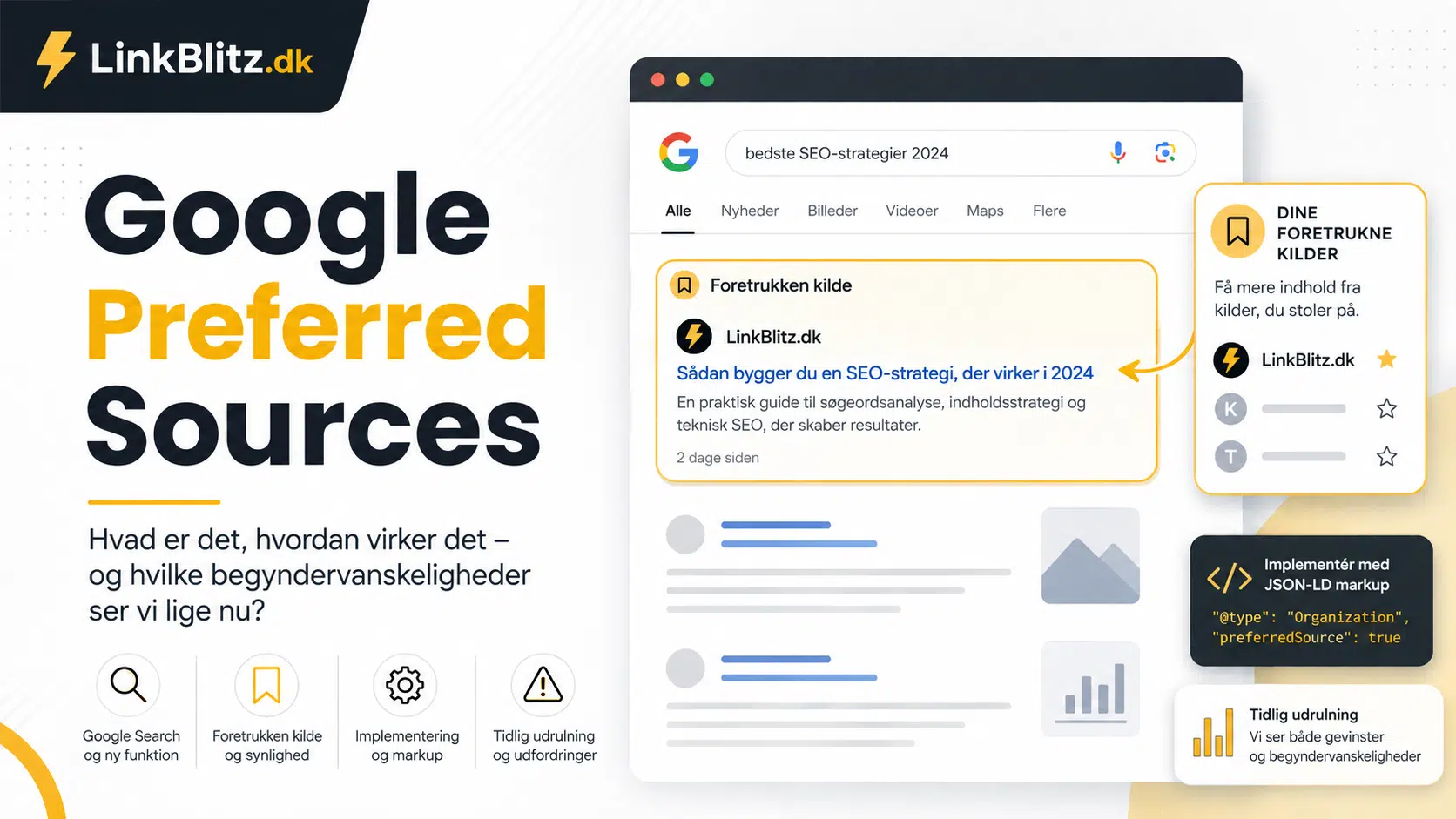
Features such as Google Preferred Sources point towards a search experience where users can have more influence over which publications they want to see.
For publishers, this changes the objective slightly.
The ambition is not only to win today’s search.
It is to become a source someone wants to encounter again tomorrow.
That requires more than keyword optimisation. It requires trust, consistency and a recognisable editorial identity.
Brand searches may become an increasingly useful signal of success
If discovery becomes more distributed, measurement needs to become broader too.
Organic traffic and rankings remain useful. But businesses should also pay attention to what happens after people encounter the brand elsewhere.
Are branded searches increasing?
Are more people arriving directly?
Are other sites mentioning the company?
Are individual guides earning links or citations?
Is referral traffic coming from publications within the right industry?
These indicators can reveal a growing presence even when the journey does not begin with a straightforward non-branded Google query.
Modern search marketing therefore moves closer to traditional brand building.
The strongest companies are not merely found.
They are remembered.
The website still has to be worth visiting
It is easy to become fascinated by what happens inside the search interface and forget the destination.
Eventually, many users still reach a website.
What they find there matters.
A cluttered site with vague content and generic claims will struggle to turn visibility into trust regardless of whether the visitor came from Google, ChatGPT or an industry publication.
The website should therefore provide something deeper than the summary that brought the person there.
Detailed explanations, useful examples, transparent information, strong supporting content and a clear sense of expertise all help.
Search may become increasingly good at answering simple questions.
Websites need to become increasingly good at providing what comes next.
SEO is becoming broader rather than obsolete
The terminology around modern search can make the industry sound fragmented.
SEO. AEO. GEO. AI SEO. Search Experience Optimization.
The labels describe real changes, but businesses should be careful not to treat each one as a separate discipline requiring an entirely new strategy.
Most of the strongest principles overlap.
Create useful content.
Understand what people are looking for.
Make information clear.
Build expertise around a subject.
Keep the website technically accessible.
Earn and build credible references.
Develop a brand people recognise and trust.
Those fundamentals support traditional search while also making the business easier to understand in newer search environments.
The tactics will continue to evolve. Search interfaces certainly will.
But the central challenge remains remarkably human: become one of the sources people are glad they found, regardless of whether the journey began with ten blue links or an AI-generated answer.